
Rebuilding together: Publishers revive a local newspaper and help their community recover from a devastating fire
Teri Saylor
Special to Publishers' Auxiliary
Jul 1, 2026
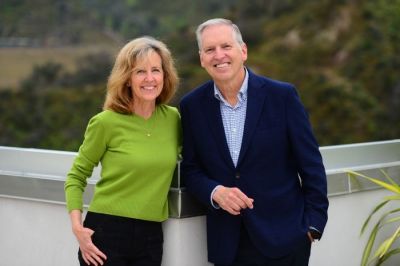
Like the mythical phoenix reborn from the ashes of its former self, the Palisadian-Post has made its triumphant return in Los Angeles.
The 98-year-old newspaper was closed in the wake of the devastating Pacific Palisades fire that destroyed most of its commercial district in 2025 and displaced most of its residents.
Instead of returning to readers’ newspaper boxes, though, the Palisadian-Post is now popping up in their inboxes.
New owners, Tim and Laura Schneider, relaunched the Palisadian-Post as a digital-first publication — a format that helps readers whose homes and businesses burned stay engaged and informed.
“We built an entirely new website to reach Palisadians of all generations, wherever they now live,” Tim says.
Subscription data shows more than 8,000 Palisadians living in nearby Santa Monica and Brentwood since the January 2025 fire. Others are scattered across the country in 33 different states, says Tim, who set a goal to help connect displaced residents and build a sense of community across time and space.
“We needed a way to reach our neighbors regardless of where they were living,” he says, “so the digital-first platform was definitely the way to go.”
Using the newspaper’s subscriber list as a base, the Schneiders augmented the existing names and addresses with data provided by research companies that turned the clock back to the day before the fire so they could get local residential information.
“In the eyes of the data world, as soon as you file a postal-forwarding order you are no longer a resident of the community where you may still identify as a resident,” Tim says.
The Schneiders also acquired email addresses for a significant number of residents living in Pacific Palisades before the fire, ending up with a database of more than 20,000 Palisadians.
Before the fire, Pacific Palisades’ population was approximately 27,000. The community also consisted of roughly 9,400 residential units and businesses, according to figures tracked by the Pacific Palisades Chamber of Commerce. Recent survey data report roughly 67% of the Palisadian population is still dislocated, Tim says.
The Schneiders recognize that it may take generations to knit their broken community back together, but in the meantime, they have launched a campaign called “Once a Palisadian, Always a Palisadian” to help their displaced neighbors feel they are still connected.
Their efforts include circulating a daily e-newsletter among their growing audience and encouraging them to send a link to friends and family so they can subscribe, too. It’s paying off.
“We’ve picked up a couple thousand additional subscribers, and it's been satisfying to see the incredibly enthusiastic and positive reaction from people,” Tim says. “We set out to use the Palisadian-Post as a connecting thread for people, and they're seeing it as a way to remain present, even if they can't move back yet.”
For many Palisadians, including the Schneiders, whose home was damaged but largely spared by the fire, insurance settlements aren’t providing enough money to rebuild.
The Schneiders are living and working in nearby Marina del Rey, and they hope to open an office in Pacific Palisades when they move back. Tim acknowledges the community is in a difficult situation.
“The Palisadian-Post was a part of the civic infrastructure that needs to be repaired. And that's why Laura and I relaunched it,” he says.
Until December 2025, Pacific Palisades, located in the Westside region of Los Angeles, had enjoyed weekly newspaper coverage for nearly a century.
According to a newspaper history published on the Palisadian-Post’s website, a group of Methodists founded Pacific Palisades in 1922 and two years later began publishing a monthly news sheet known as the “Progress.”
Palisadian-Post founder Telford Work moved to the Palisades in March 1926 and took a job as the director of public relations for the Pacific Palisades Association.
A journalism graduate from the University of Southern California who had assembled a small chain of local newspapers near Fresno, Work eventually became editor of the Progress. On May 4, 1928, he launched The Palisadian, an eight-page weekly tabloid, and sold copies for five cents.
In 1934, Work sold the newspaper to his friend, Clifford D. Clearwater, but stayed involved in its production. In 1978, Work received the National Newspaper Association’s Amos Award. He died in 1992.
The newspaper changed hands several times over the years.
In 2013, Alan Smolinisky, a real estate entrepreneur, bought the Palisadian-Post. But as the newspaper industry changed, newspaper publishing became more challenging, and production slowed from a weekly to a twice-monthly format. The fire was its death nell.
Smolinisky said at the time that readership had plunged to zero after the fire, and as 2026 dawned, he closed the newspaper.
The Schneiders, long-time residents and veterans of the publishing industry, could not imagine life without the Palisadian-Post, and they relaunched it May 4, 2026, on its 98th anniversary.
“The community has never needed a source of reliable, fact-checked information more than it does now,” Tim says, pointing to the enthusiastic response he has received from readers about the relaunch. “I think it underscores the importance of community news, particularly coming out of a situation that was as devastating as these fires were.”
The Schneiders describe the 2.0 version of the Palisadian-Post as a “reverence for the past with a vision for the future.”
Telford Work’s 1915 Royal typewriter holds a place of honor in Tim’s office. In a video conference call, he scoots his chair back, revealing the machine sitting proudly, its stiff mechanical keys ready for an editor to pound out a news story the old-fashioned way.
The Schneiders have lived in Pacific Palisades for 23 years, raising two sons.
Tim, a self-described “news nerd,” grew up on a dairy farm in central Kansas, where he published “The Farm Monthly” newsletter, sharing a printed copy with his siblings and friends — for a fee.
“That was my earliest adventure in publishing,” he says.
In high school, he gravitated to radio, becoming the news editor at a local station while also working as a stringer for the AP and UPI.
He carved out a notable publishing career, and at 26, he founded Schneider Publishing Company. He launched several media and events properties, including SportsTravel magazine, the TEAMS Conference & Expo, and the EsportsTravel Summit. He was inducted into the National Association of Sports Commissions Hall of Fame for his role in developing the international sports event industry.
Laura’s career took her to the business side of large daily newspapers.
She laughs and attributes her husband’s love for her to his love for newspapers. “I think at least half of my appeal when Tim and I met was that I worked for the Los Angeles Times.”
Laura, a native of northern California, had worked for Gannett in Reno prior to the LA Times, and like many kids growing up in a family of newspaper readers, she attributes her love of the printed page to her father.
“Dad used to make me pick a section of the San Francisco Chronicle to read and report back to him at dinnertime,” she says. “I worked in marketing, but my heart has always been in the newsroom.”
According to Wildfire Alliance statistics, the Palisades Fire destroyed 6,837 structures, leveling most of the downtown, including churches, schools, businesses and homes. Twelve people died.
Miraculously, the Palisadian-Post’s former owner had moved the newspaper’s offices out of town a couple of years before the fire. In addition to all the archives, the move saved more than a dozen filing cabinets full of clippings and records from earlier eras and thousands of photos that were never published. Included in the archives is microfilm dating back to 1928.
“The archives will be digitally enhanced so people can search online for their relatives, read obituaries find old addresses, and learn about former businesses,” Tim says. “It’s a treasure trove for a community that thought it had lost its history in the fire.”
As the Schneiders build a new business model, they are grateful for talented people in Pacific Palisades who donate their time and skills to the newspaper by writing stories, shooting videos and taking pictures.
“Those people are weaving a great tapestry that tells the story of not only the horrible things that have happened in our community but how people and businesses are coming back and how they're making their comeback stories happen,” Laura says.
In the wake of the fire and destruction of many of the community’s businesses, it’s clear that advertising as it existed with a printed newspaper is no longer feasible, Tim says.
He turned to a partnership model that had worked in his former business-to-business publishing career.
Instead of trying to sell space on the newspaper’s digital pages one ad at a time, the Schneiders are focusing on building long-term partnerships with people and businesses willing to make an investment in the future of Pacific Palisades.
“We’ve learned that businesses are willing to make that investment because they’re here for the long haul,” he says.
Partnerships include sponsoring the daily email newsletters, breaking news emails, and a variety of live events the Palisadian-Post hosts, including a popular spelling bee, the Citizen of the Year Award, a Halloween decoration contest and holiday events at Christmastime.
The Schneiders have considered converting to nonprofit status, but instead, they are taking a hybrid approach, advancing a relationship with the Alternative Newsweekly Foundation (ANF) as a fiscal sponsor to enable tax-deductible donations.
Through the end of this year, the Palisadian-Post is free, with no paywall. The Schneiders are considering adopting a membership model rather than selling subscriptions to help readers and businesses feel they are a part of the newspaper.
“I think we can appeal to readers in a way that has the best potential for long-term success,” Tim says. “This newspaper has been around for 98 years, and we want it to be around for 98 more.”
In addition to donating their time to get the newspaper off the ground, the Schneiders are relying on a team of freelancers that support their area volunteers in providing content. They hope to add full-time journalists to the team as soon as it is financially viable.
As they build their talent pool, they are also seeking a team that can keep the Palisadian-Post going after they retire.
The Schneiders are amazed to discover how much their community loves and relies on the newspaper. Admiration comes from faraway places, too.
“We received a letter the other day from somebody in Pittsburgh who heard a story about us and the newspaper on NPR and felt she had to sit down and write a letter about how important community news is in her own life,” Tim says. “The last sentence reads, ‘I'm rooting for you.’”
Teri Saylor is a writer based in Raleigh, North Carolina. Connect with her at terisaylor@hotmail.com.